
If your child is in 6th or 7th grade in Loudoun County, you have probably started hearing about "the Academies" from other parents. Maybe at a school night, maybe in a neighborhood group chat, maybe from a friend whose older child went through the process. The information comes in fragments, and a lot of it is wrong.
This guide is for families who are just getting started. We will walk through what ACL actually is, how the schedule works, what skills matter most right now, and the misconceptions that lead families astray every year.
What Are the Academies of Loudoun?
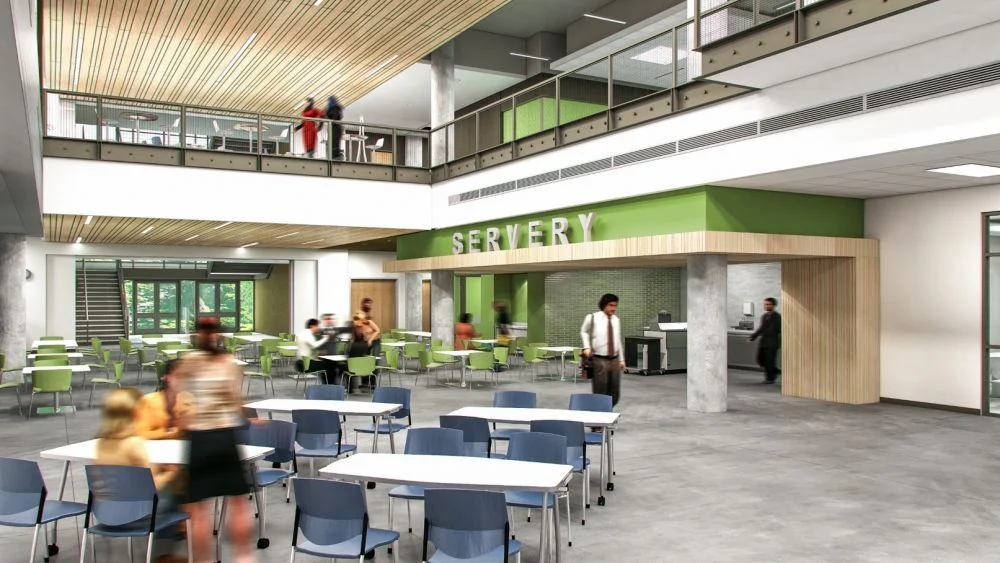
The Academies of Loudoun (ACL) are three STEM-focused magnet programs operated by Loudoun County Public Schools (LCPS). All three are housed on a shared campus in Sterling, Virginia, and all three are exclusively available to Loudoun County residents enrolled in LCPS.
The three academies are distinct programs with different admission processes, student populations, and areas of focus:
- Academy of Science (AOS) — The most selective of the three, with an acceptance rate typically between 4% and 8%. AOS is research-intensive, centered on scientific inquiry. Students design and conduct original research projects and present findings at regional and national competitions. This is the program most comparable to TJHSST in terms of selectivity and rigor.
- Academy of Engineering and Technology (AET) — A competitive program offering three distinct tracks: Engineering, IT/Computer Science, and Entrepreneurship. AET is focused on applied problem-solving, and students work on real-world design challenges throughout the program. Admission is test-based, like AOS, though acceptance rates are somewhat higher.
- Monroe Advanced Technical Academy (MATA) — The broadest of the three, offering 26 career pathways that range from health sciences and cybersecurity to culinary arts and automotive technology. MATA admission is lottery-based, not test-based. This is an important distinction that many families miss.
All three programs share the Academies of Loudoun campus, but they function as separate schools with separate curricula, separate admission processes, and separate student bodies.
The A/B Schedule: What It Really Looks Like
This is the single most misunderstood aspect of ACL, and it is the one that matters most for families making decisions.
Unlike Thomas Jefferson High School for Science and Technology, where students leave their zoned school entirely and attend TJ full-time, ACL operates on an alternating A/B schedule:
- A days: Your child attends classes at the Academies of Loudoun campus in Sterling. These are the specialized STEM courses — the labs, the research, the engineering projects.
- B days: Your child is at their home high school. They take core academic classes (English, history, math, world languages), see their friends, eat lunch in the cafeteria, and participate in clubs, sports, and social activities.
Here is the part that surprises most parents: your child graduates from their home high school, not from ACL. The Academies coursework appears on their transcript as specialized electives, but their diploma comes from Briar Woods, Potomac Falls, Riverside, or whichever LCPS high school they are zoned for.
This dual-enrollment model is fundamentally different from the TJ experience. Your child gets access to advanced STEM education, specialized labs, and expert instructors — without giving up their normal high school life. They still play on their home school's basketball team. They still go to prom with their friends. They still have a guidance counselor at their home school who knows them.
LCPS provides transportation between the home school and the ACL campus, so logistics are handled. The bus schedule is coordinated with the bell schedules at both locations.
Skills to Build Now (This Isn't Test Prep)
If your child is in 6th or 7th grade, this is not the time to start drilling practice tests. The students who perform best on ACL assessments are not the ones who memorized the most — they are the ones who spent years developing genuine thinking skills. Here is what to focus on right now:
Critical thinking. Play strategy games as a family — chess, Settlers of Catan, Blokus. Solve logic puzzles together. At the dinner table, ask "what would happen if..." questions and let your child reason through the answer. The goal is not to find the right answer quickly but to get comfortable with the process of thinking through problems that do not have obvious solutions.
Spatial reasoning. This is one of the five domains measured on the STEM Thinking Skills Assessment, and it is the one families most often overlook. Build with LEGOs (real building, not following instructions). Play Tetris. Try tangram puzzles. Practice mentally rotating shapes — "if I flip this piece over and turn it 90 degrees, what does it look like?" These are skills that develop with practice, and they are difficult to cram for later.
Writing fluency. Your child does not need to write essays. They need to write regularly about anything. A journal, short stories, responses to thought experiments, letters to relatives — the medium does not matter. What matters is building comfort with putting thoughts on paper under time pressure. The ACL Writing Assessment asks students to construct an argument quickly, and students who freeze when facing a blank page are at a significant disadvantage regardless of how smart they are.
Mental math confidence. The STEM test does not allow a calculator. If your child reaches for their phone every time they need to figure out a tip or split a bill, start building the habit now. Practice estimation ("about how many tiles are on this floor?"), mental arithmetic, and number sense. Khan Academy's arithmetic and pre-algebra courses are free and excellent for this.
Intellectual curiosity. Read about science. Watch documentaries. Tinker with code on Scratch or experiment with circuits from a kit. ACL values students who are genuinely curious about how things work, and that curiosity shows up in how students approach the assessments. A child who has spent years asking "why does that happen?" will approach an unfamiliar problem differently than one who has only ever studied what was assigned.
Misconceptions You'll Hear from Other Parents
Every year, families make decisions based on information that sounds authoritative but is simply wrong. Here are the most common misconceptions we encounter:
"Only straight-A students get in."
Grades matter, but ACL uses blind admissions. There are no teacher recommendations, no portfolios, no interviews, and no extracurricular reviews. Your child is evaluated on exactly three things: their STEM test score, their writing score, and their academic record. A strong test performance can offset imperfect grades. Students with a mix of A's and B's are admitted every year.
"You need expensive tutoring to have a chance."
The STEM Thinking Skills Assessment measures innate reasoning ability across five domains: quantitative reasoning, spatial reasoning, verbal reasoning, logical reasoning, and pattern recognition. While targeted preparation helps students perform their best by familiarizing them with the format and time constraints, the test is specifically designed to be difficult to game with pure memorization. No amount of flashcards will substitute for genuine thinking ability built over years.
"MATA is the easy option."
MATA admission is lottery-based, not test-based, which means it is a different process entirely — not an easier version of the same one. And MATA itself is far from easy. It offers 26 serious career pathways with industry-recognized certifications. Students in MATA's health sciences pathway, for example, can earn their Certified Nursing Assistant (CNA) certification before graduation. Students in the cybersecurity pathway earn CompTIA credentials. These are rigorous programs with real professional outcomes.
"My child should wait to see if they're 'STEM enough.'"
This misconception comes from thinking ACL is only for kids who love chemistry and calculus. AET covers engineering, IT, and entrepreneurship. MATA covers everything from culinary arts to cybersecurity to health sciences. The Academies of Loudoun are far broader than "pure STEM," and students often discover passions they did not know they had once they are exposed to the options. If your child is curious and motivated, ACL likely has something for them.
"The alternating schedule is confusing and disruptive."
Thousands of Loudoun County students thrive on the A/B model every year. It is a well-established system with LCPS-provided transportation and carefully coordinated bell schedules. Students adjust quickly — typically within the first few weeks — and most report that the variety of two campuses keeps their days more engaging, not less. The schedule is also consistent and predictable, alternating on a set calendar published at the start of the year.
When to Start Paying Attention
The ACL admissions timeline moves faster than most families expect. Here is a rough framework:
- 6th grade: Awareness. Learn what ACL is. Visit the campus during an open house if possible. Talk to families who have been through the process. Read the LCPS website and understand the differences between AOS, AET, and MATA. This is the year to gather information without pressure.
- 7th grade: Skill-building. Start intentional practice in critical thinking, writing, and spatial reasoning. This is not about test prep — it is about building the cognitive skills that the assessments measure. Encourage reading, problem-solving, and intellectual exploration.
- 8th grade: Focused preparation. The application typically opens in September, with testing in October or November. By this point, your child should be familiar with the test format, comfortable with timed writing, and confident in their reasoning abilities. This is when structured preparation — practice tests, timed writing exercises, domain-specific drills — makes the biggest difference.
For a detailed month-by-month breakdown of what to do and when, see our complete ACL admissions timeline for Loudoun families.
Questions to Ask Your Child
Before you dive into test prep logistics, have a real conversation with your child. ACL is a significant commitment, and it works best when the student — not just the parent — is genuinely interested. Here are some conversation starters:
- "Would you like a school day split between two campuses — one for advanced STEM and one for everything else?"
- "Are you interested in engineering, scientific research, or a specific career like health sciences or cybersecurity?"
- "Would you want to keep playing on your home school's sports team while doing advanced coursework somewhere else?"
- "How do you feel about taking a test that's different from anything you've seen in school — one that measures how you think, not what you've memorized?"
- "What would you want to learn more about if you had the choice?"
The answers to these questions will tell you a lot. A child who lights up at the idea of splitting their day between two campuses and exploring engineering is a very different candidate than one who feels anxious about leaving their friend group — and both of those reactions are completely valid. ACL is an incredible opportunity, but it is not the only path to a great education in Loudoun County.
The most important thing you can do right now is give your child the information they need to form their own opinion, and then support whatever direction that takes them.
Thinking About ACL for Your Family?
Our programs help Loudoun County families prepare for ACL admissions with expert-designed curriculum covering all five STEM domains and the Writing Assessment.
Compare Programs