
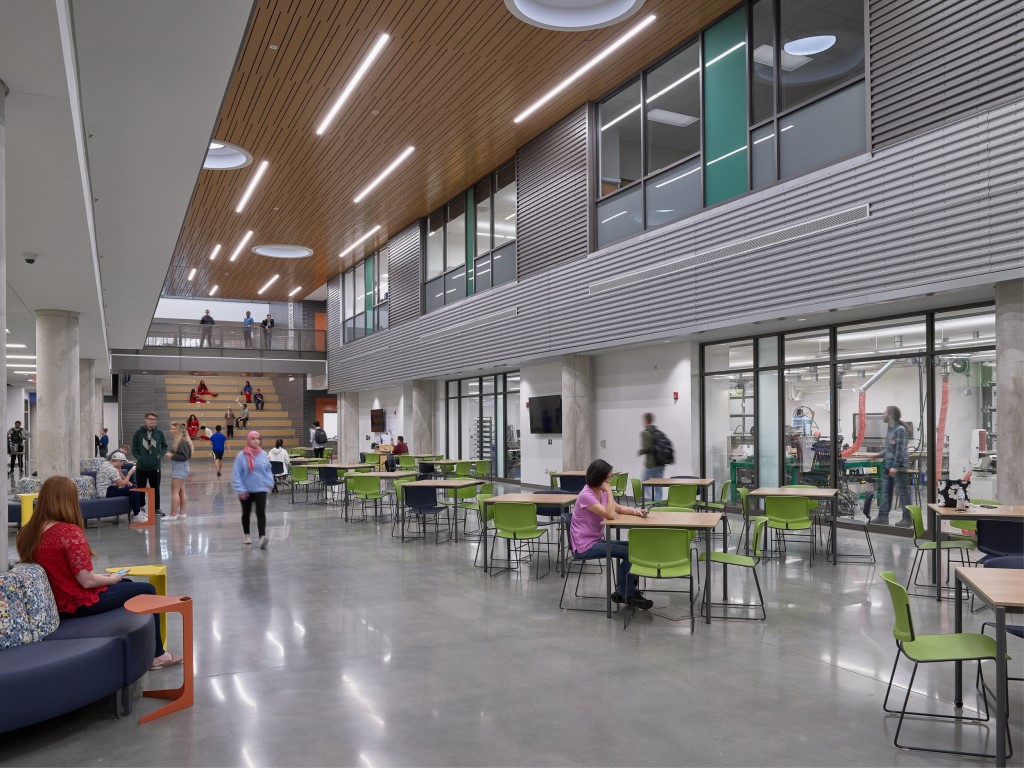
For the 2026 fall cycle, AOS and AET applicants test on November 12, 2026, during the school day at every LCPS middle school. Private and homeschool applicants test at the Academies of Loudoun. Students complete the Writing Assessment and the 2026 Academies of Loudoun Admission Test.
That is a change from past cycles, when applicants registered for a session at the Academies of Loudoun. Older guides, including earlier versions of this one, describe that process. This page keeps it as history and flags what LCPS has not yet published for 2026.
The short version
Make sure the application was approved in ParentVUE by the October 15, 2026 noon deadline, then watch for testing instructions from LCPS or your school. The Writing Assessment is 30 minutes. LCPS has not published the admission test's length for 2026.
What happens before test day
The application window runs August 24 to October 15, 2026 at 12:00 noon, and an application only counts once a parent or guardian approves it in ParentVUE by the deadline. Students applying to both AOS and AET submit a separate application for each program but take the assessments once.
In past cycles, applicants registered for a test session through the application portal and received an emailed personal test ticket, per the LCPS admissions FAQ as archived in 2024. For 2026, public school students test at their own middle school during the school day, so check the current instructions rather than looking for a session sign-up.
If a student needs assessment accommodations, the request must be submitted in writing by the published application deadline. LCPS says it can consider only accommodations documented in an IEP, Section 504 Plan, or English Learner Assessment Participation Plan.
Parent checkpoint
Keep any official testing email somewhere easy to find, and confirm the plan for the day a week ahead. Private and homeschool families testing at the Academies of Loudoun should confirm arrival, ID, and transportation details with the Admissions Office.
Check-in, devices, and transportation in past cycles
When testing was held at the Academies of Loudoun, LCPS asked every applicant to present at check-in:
- a printed personal test ticket; and
- a photo ID.
In those cycles, the assessments were given in person on an online platform, and ACL provided the testing laptop. LCPS has not published device details for 2026.
Applicants could also request bus transportation to the ACL test session. For 2026, public school students test at their own middle school during the school day, so most families will not need to plan a trip. Private and homeschool families should confirm transportation with the Admissions Office.
The two assessments in the session
| Assessment | Published time | Published format |
|---|---|---|
| Academies of Loudoun Admission Test | Not published for 2026 (past cycles: 50 minutes) | Not published for 2026 (past cycles: 33 multiple-choice questions from Insight Assessment) |
| Writing Assessment | 30 minutes (earlier cycles listed 45) | Response to a writing prompt, scored 0 to 10 on five indicators |
LCPS says there are no benchmarks or minimum scores. The official FAQ says applicants are evaluated across the entirety of the published criteria. That is a reason to take both assessments seriously, not a reason to chase an unofficial cutoff.
What the pacing felt like in the past format
In the past format, fifty minutes for 33 questions gave an average of about 91 seconds per question, but the useful lesson is not to spend exactly 91 seconds on each one. Some items resolve quickly. Others need a diagram interpreted, a relationship tested, or an unproductive approach abandoned.
The writing assessment creates a different pressure. Thirty minutes must cover reading the prompt, choosing a central idea, planning, drafting, and revising. A student who writes immediately can produce more words and still leave the reader with a less coherent answer.
A calmer plan for the week before
AcademiesPrep interpretation
The advice below is preparation guidance, not an LCPS rule or packing list.
Five to seven days before
Run one realistic two-part practice block. The purpose is to observe pacing and transitions, not to cram every topic. Afterward, classify mistakes: misread, setup, reasoning, execution, or time management. Fix the pattern that appears most often.
Two to three days before
Complete one short STEM set and one writing outline. Review the student's own pacing plan. Reread the official testing instructions for this cycle.
The evening before
Stop early enough for a normal bedtime. A final marathon session is unlikely to create a new reasoning habit, and it can make the student slower and less flexible the next morning.
During the session
On STEM items, notice when an approach is consuming time without producing information. On writing, protect a few minutes for revision. Clear thinking is more valuable than trying to look unhurried.
If the family wants a baseline before building a study plan, our free ACL Admissions Diagnostic reviews a STEM reasoning sample and writing response. It is useful because it identifies what to practice, not because it predicts an admissions result.
ACL Test Day Guide FAQs
Do AOS and AET applicants register for separate test sessions?
No. Each program needs its own application, but both use the same assessments. For 2026, LCPS lists one test date, November 12, 2026, during the school day at every LCPS middle school. Private and homeschool applicants test at the Academies of Loudoun.
What must a student bring to ACL test day?
In past cycles, when testing was held at the Academies of Loudoun, LCPS required a printed personal test ticket and a photo ID at check-in. For 2026, most students test at their own middle school during the school day. Follow the instructions LCPS or your school sends for this cycle, especially if your student is a private or homeschool applicant testing at the Academies of Loudoun.
Does the student need to bring a laptop?
In past cycles, LCPS said both assessments used an online platform and that ACL provided the testing laptops. LCPS has not published device details for 2026, so follow the testing instructions sent for this cycle.
Is bus transportation available for the test session?
In past cycles, applicants could request bus transportation to the test session at the Academies of Loudoun. For 2026, public school students test at their own middle school during the school day. Private and homeschool families testing at the Academies of Loudoun should confirm transportation with the Admissions Office.
Keep reading
- Build an admission test pacing plan
- Understand the ACL writing assessment
- See what the official sources say about calculator use
- Review all four AOS and AET admissions criteria
Source note
We checked this guide against current LCPS and Academies of Loudoun materials. Where a dated LCPS page provides historical context, the article labels it by cycle rather than presenting it as a current rule. AcademiesPrep by EduAvenues is independent and is not endorsed or sponsored by the Academies of Loudoun or Loudoun County Public Schools.
Official sources reviewed:
- LCPS Academies of Loudoun Admissions and Outreach
- Academies of Loudoun admissions FAQ
- LCPS admissions FAQ as archived in August 2024 (past test format)
- LCPS 2026-2027 Fall Admissions Writing Prompts & Scoring Rubric
Fact-checked September 26, 2026. LCPS can change criteria, pathway eligibility, selection rules, assessment details, and dates by cycle. Confirm time-sensitive requirements on the active admissions page.