
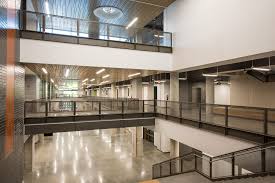
One of the most common questions families ask after their child is accepted to the Academies of Loudoun is deceptively simple: what does a typical school day actually look like? The answer is unlike anything most families have experienced in traditional schooling, because ACL students do not attend a single campus. They split their week between two schools on an alternating A-Day/B-Day schedule.
If you are preparing for life at ACL — whether your child has just been accepted or you are still exploring the program — understanding the alternating schedule is the single most important thing you can do. It shapes everything: course selection, study habits, social dynamics, commute logistics, and daily routines. Here is exactly how it works.
How the Alternating Schedule Works
ACL uses an alternating day system that divides the school week between two campuses. On A days, your child attends the Academies of Loudoun campus for STEM-focused coursework. On B days, your child attends their home high school — the LCPS school they would attend based on where your family lives in Loudoun County.
All three ACL programs use this same alternating structure: the Academy of Science (AOS), the Academy of Engineering and Technology (AET), and the Monroe Advanced Technical Academy (MATA). Regardless of which program your child enrolls in, the fundamental rhythm of alternating between two campuses remains the same.
Your child is dual-enrolled at both schools simultaneously. This is not a transfer or a part-time arrangement. Your child is a full student at their home high school and a full student at ACL. They maintain records, relationships, and responsibilities at both campuses throughout the school year.
One detail that surprises many families: students graduate from their home high school, not ACL. The diploma comes from the home school. ACL is a supplementary program that enriches your child's education with intensive STEM coursework, but the home school remains the school of record for graduation purposes.
What Happens on A Days (at the ACL Campus)
A days are the days your child spends at the Academies of Loudoun campus. This is where the STEM-intensive coursework happens. The specific classes depend on which program your child is enrolled in, but the general structure includes:
- Integrated math and science courses — These are not the same courses offered at the home school. AOS, for example, uses an integrated math and science curriculum that is unique to the program. The curriculum is designed to connect mathematical concepts directly to scientific applications in ways that a traditional high school schedule does not allow.
- Program-specific classes — For AOS students, this means specialized science coursework built around the integrated model. For AET students, it means project-based engineering and technology courses across three career tracks. For MATA students, it means career and technical education (CTE) pathway courses aligned to specific industry certifications.
- Lab work and hands-on projects — A significant portion of A-day instruction involves laboratory work, engineering projects, and applied learning that would not be possible in a standard high school setting. ACL's facilities are purpose-built for this kind of instruction.
The academic weight of these courses varies by program and course level. AOS courses carry GPA weighting of 0.5 for Honors-level courses and 1.0 for AP-level courses. This weighting matters for GPA calculations and class rank at the home school, so families should understand how ACL grades will appear on the transcript.
A days tend to be the more academically intense days of the week. Many ACL families report that the pace of instruction at the academy is faster and the expectations are higher than what their child experienced in middle school. This is normal and expected — the program is designed for students who thrive on academic challenge and want to go deeper into STEM fields.
What Happens on B Days (at Home School)
B days are the days your child spends at their home high school. This is where they take core academic courses that are not covered at ACL:
- English and language arts
- Social studies and history
- World languages
- Elective courses
Many ACL students take Advanced Placement (AP) classes at their home school in these subject areas. This is one of the realities of the ACL experience that families should understand upfront: your child is managing rigorous STEM coursework at ACL alongside rigorous academic coursework at the home school. The combined workload is substantial, and it requires strong time management skills that many students are developing for the first time.
B days are also when most extracurricular activities happen. ACL does not operate its own athletics, student government, or traditional extracurricular programs. All of those activities — sports teams, marching band, theater productions, debate team — take place at the home school. This is an important point that many families do not fully realize until after enrollment: your child's social and extracurricular life remains anchored at the home school, not at ACL.
This dual reality is one of the defining features of the ACL experience. Your child is building an academic identity at the academy while maintaining their social and extracurricular identity at the home school. It is a balancing act, and it is one of the reasons that the social dynamics of ACL life deserve their own conversation.
Transportation and Logistics
LCPS provides bus transportation for ACL students. Your child does not need to drive themselves between campuses or rely on parent drop-off to get to the academy on A days. The school system operates bus routes that transport students from their home school area to the ACL campus and back.
The logistics of this transportation are something families should plan for carefully. Many ACL families report that the commute adds meaningful time to the school day. Loudoun County is geographically large, and depending on where your family lives relative to the ACL campus, the bus ride can be a significant part of your child's daily routine on A days.
We recommend that newly accepted families contact their home school's transportation office for specific route information and timing well before the school year starts. Bus routes and schedules can change from year to year, so getting current information directly from LCPS is always the best approach. Do not rely on information from previous years or other families whose routes may differ from yours.
Managing Dual Enrollment: The Practical Challenges
The alternating schedule creates a unique set of logistical challenges that families in traditional schooling never encounter. Here are the most common ones that ACL families navigate:
Course Sequencing and Selection
Because your child takes STEM courses at ACL and humanities and elective courses at the home school, course selection requires coordination between both campuses. Your child's guidance counselor at the home school and the ACL administration both play a role in making sure the schedule works without conflicts. Many ACL families find that they need to be proactive about this coordination — do not assume both schools are automatically in sync. Ask questions early during course selection season and follow up if you do not hear back.
Materials and Organization
Your child will need materials for two entirely different sets of classes at two different buildings. Students and families consistently report that having a clear organizational system — separate binders or folders for each campus, a well-organized backpack, digital copies of key documents accessible from anywhere — makes a meaningful difference in daily life. Forgetting a textbook or assignment at the wrong school is a common early-semester frustration that good organization prevents.
Communication with Teachers
Your child has teachers at two schools who may not communicate with each other about workload, project timelines, or exam schedules. If both schools assign major projects or exams during the same week, your child may face a concentrated crunch that feels overwhelming. Many experienced ACL families suggest maintaining a shared family calendar that tracks assignments and deadlines from both campuses. When conflicts arise, encourage your child to communicate proactively with teachers. Most teachers at both ACL and the home school understand the dual-enrollment challenge and will work with students who ask for help early.
The Adjustment Period
Nearly every ACL family we speak with says the same thing: the first few weeks are the hardest. Your child is learning new routines, new buildings, new teachers, a new commute, and a new academic pace — all at once. This adjustment period is completely normal and does not indicate that your child is not cut out for the program. By the end of the first quarter, most students have found their rhythm and the alternating schedule starts to feel natural rather than disorienting.
Practical Tips from ACL Families
Based on what families in the program consistently share, here are the strategies that tend to make the biggest difference:
- Use a single planner or digital calendar that includes assignments, tests, and deadlines from both schools. Many students find that a digital tool they can access from either campus works better than a paper planner that might be left at the wrong building.
- Pack your bag the night before based on which campus you are attending the next day. This sounds basic, but it eliminates the morning scramble of figuring out which materials you need and reduces the chance of leaving something critical behind.
- Use commute time productively. Many ACL students use the bus ride to review notes, start homework, or catch up on reading assignments. This is not wasted time — it is a built-in study period if you use it intentionally. (We cover this in detail in our commute survival guide.)
- Build relationships at both schools early. It can be easy to feel like a visitor at one campus or the other, especially in the first weeks. Making a deliberate effort to connect with classmates and teachers at both schools helps your child feel rooted in both communities.
- Communicate proactively when workload conflicts arise. Do not wait until you are behind to ask for help. Teachers and counselors at both campuses want students to succeed, but they need to know about scheduling conflicts to provide support.
- Give yourself grace during the transition. The first semester is a learning curve for the entire family. It is okay for routines to feel messy at first. What matters is building systems that work for your family over time, not getting everything perfect on day one.
The alternating schedule is different from anything your child has experienced before, and it requires a level of self-management that many 9th graders are building for the first time. That is part of the ACL experience. The students who thrive are not necessarily the ones with the highest test scores — they are the ones who develop strong organizational habits, ask for help when they need it, and give themselves room to grow into the new routine.
FAQs
How does the A-Day/B-Day schedule work at ACL?
ACL uses an alternating day schedule. On A days, students attend the Academies of Loudoun campus for STEM coursework including integrated math, science, and program-specific classes. On B days, students attend their home high school for English, social studies, world languages, and electives. LCPS provides bus transportation between schools. All three programs — AOS, AET, and MATA — follow this same structure.
Do ACL students graduate from ACL or their home high school?
ACL students graduate from their home high school. The diploma comes from the home school. Students are dual-enrolled at both campuses, but their home high school remains the school of record for graduation purposes. ACL courses appear on the transcript alongside home school courses.
Can ACL students still participate in sports and extracurricular activities?
Yes. Extracurricular activities — including sports, student government, band, theater, and clubs — happen at the home high school. ACL does not operate its own athletics or traditional extracurricular programs. Students participate in these activities through their home school, typically on B days and after school hours.
Is the A-Day/B-Day schedule the same for AOS, AET, and MATA?
Yes. All three ACL programs use the same alternating A-Day/B-Day schedule. The specific courses taken on A days differ by program — AOS students take integrated science, AET students take engineering courses, and MATA students take CTE pathway courses — but the overall structure of alternating between ACL and the home school is identical across all three programs.
Preparing for ACL Admissions?
Understanding what life at ACL looks like is the first step. If your child is still preparing for the admissions process, our programs focus on the exact skills ACL evaluates: critical reasoning, spatial thinking, and scenario-based writing.
Compare Programs