
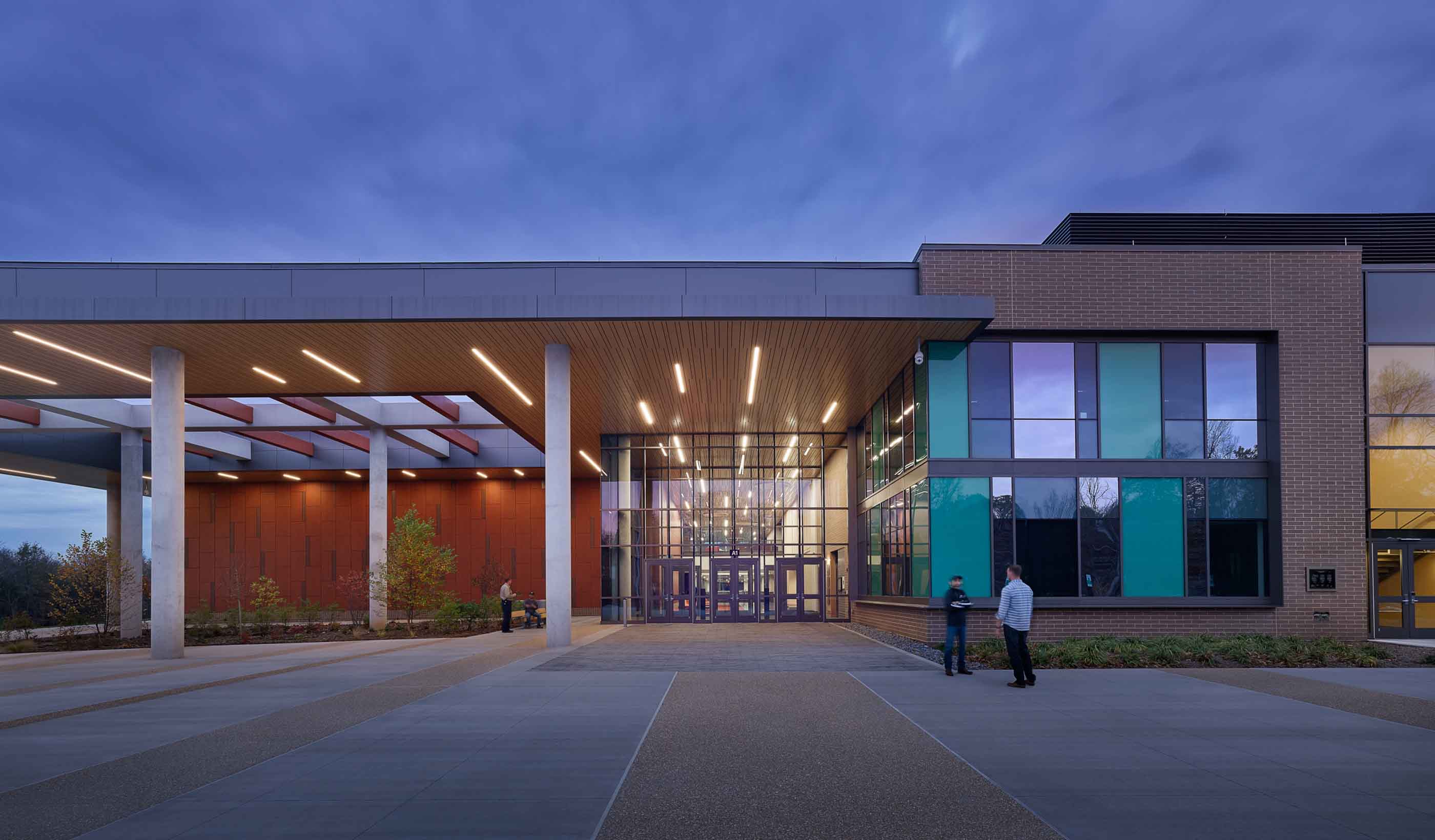
ACL students do not have to choose one school as their “real” community. They are concurrently enrolled at the Academies of Loudoun and a home high school, and both campuses can hold meaningful classes, friendships, activities, and adult support.
What no public source can promise is that every student will feel equally connected at both schools, or that the adjustment follows one timeline. The better goal is to build a few dependable connection points in each place.
Belonging is built through repetition
One familiar lunch table, one club, one project team, or one trusted adult can matter more than trying to know everyone on two campuses.
Start with the published two-school structure
The ACL admissions FAQ says admitted students remain full-time students at both ACL and their home high school. ACL also publishes its own extensive club list. LCPS separately supports activities across home high schools, and the current hub-stop page says afternoon transportation returns ACL students to the home high school.
That structure creates opportunity, but it also creates decisions. Two club calendars can conflict. A student may be present for only some announcements or meetings. Transportation after an activity may require a separate plan.
Choose connection anchors at each school
The following is AcademiesPrep judgment, not a school rule. Begin with one repeatable anchor at each campus:
| At ACL | At the home high school |
|---|---|
| A project partner or study group that meets consistently. | A lunch routine or class connection on home-school days. |
| One current ACL club that matches a real interest. | One activity whose schedule and transportation are workable. |
| A teacher, adviser, or counselor the student can approach. | A counselor, coach, director, or teacher who understands the two-school schedule. |
More is not automatically better. A student who participates reliably in two communities has a stronger foundation than a student who joins six groups but cannot attend consistently.
Treat logistics as part of social life
- Check the current A/B calendar. Do not assume a meeting always falls on a day the student is at that campus.
- Confirm the ride home. Afternoon return to the home school does not answer every late-activity transportation question.
- Tell advisers about the split schedule. Clear context is better than unexplained absences.
- Keep one shared calendar. Add meetings, performances, competitions, and major school events from both campuses.
- Leave room for unscheduled time. Friendship cannot be optimized like a résumé.
Use a check-in that invites a real answer
“Do you have friends?” is a hard question for a teenager to answer. Try narrower questions:
- Who would you ask if you missed an announcement at ACL?
- Is there one activity at either school you look forward to?
- Where does the schedule make it hard to participate?
- Is there an adult at each school who understands your week?
- Do you want help with logistics, or do you want space to handle it?
These questions reveal practical barriers without assuming that quietness, introversion, or a small friend group is a problem.
Know when adult support helps
Adjustment looks different for every student. Persistent isolation, dread about one campus, loss of interest, or a transportation barrier that repeatedly blocks participation is worth discussing. The official ACL Student Services page specifically directs families to involve both the Academies counselor and the home-high-school counselor for social and emotional support.
Two schools can mean two support teams
Do not make one counselor guess what is happening at the other campus. Share the relevant schedule and concern with both when coordinated support is needed.
ACL Social Life FAQs
Does ACL have clubs of its own?
Yes. ACL publishes a current club page with many academic, service, cultural, creative, and affinity organizations. Availability, meeting times, advisers, and participation rules can change, so students should check the current page and announcements.
Can ACL students stay involved at their home high school?
ACL students remain concurrently enrolled at the home high school. The current transportation page says afternoon service returns ACL students to the home high school, supporting participation in activities there. A family should still verify the specific activity, schedule, and ride home.
Will every student feel connected at both schools?
No universal experience should be promised. Interests, schedules, personality, transportation, and the welcome students receive all differ. A small number of reliable connection points is a more useful goal than instant belonging everywhere.
Where can a student get social or emotional support?
The ACL Student Services page says families should contact both the Academies counselor and the home-high-school counselor when social or emotional support is needed.
Keep reading
- Review the current ACL club guide
- Understand the ACL A/B schedule
- Plan around the current transportation model
- Review the ACL admissions overview
Source note
This guide was checked against the ACL admissions FAQ, official ACL club page, ACL Student Services page, and current LCPS hub-stop guidance. Those sources establish concurrent enrollment, current club listings, counselor support, and the published afternoon transportation model. They do not establish one universal social experience, adjustment timeline, friendship pattern, club schedule, or activity outcome. The connection strategies in this article are AcademiesPrep judgment, not LCPS policy. AcademiesPrep by EduAvenues is independent and is not endorsed or sponsored by the Academies of Loudoun or Loudoun County Public Schools.
Official sources reviewed:
- Academies of Loudoun admissions FAQ
- Academies of Loudoun clubs
- Academies of Loudoun Student Services
- LCPS transportation hub stops
Fact-checked July 17, 2026. Families should verify current LCPS documents and student-specific guidance.