
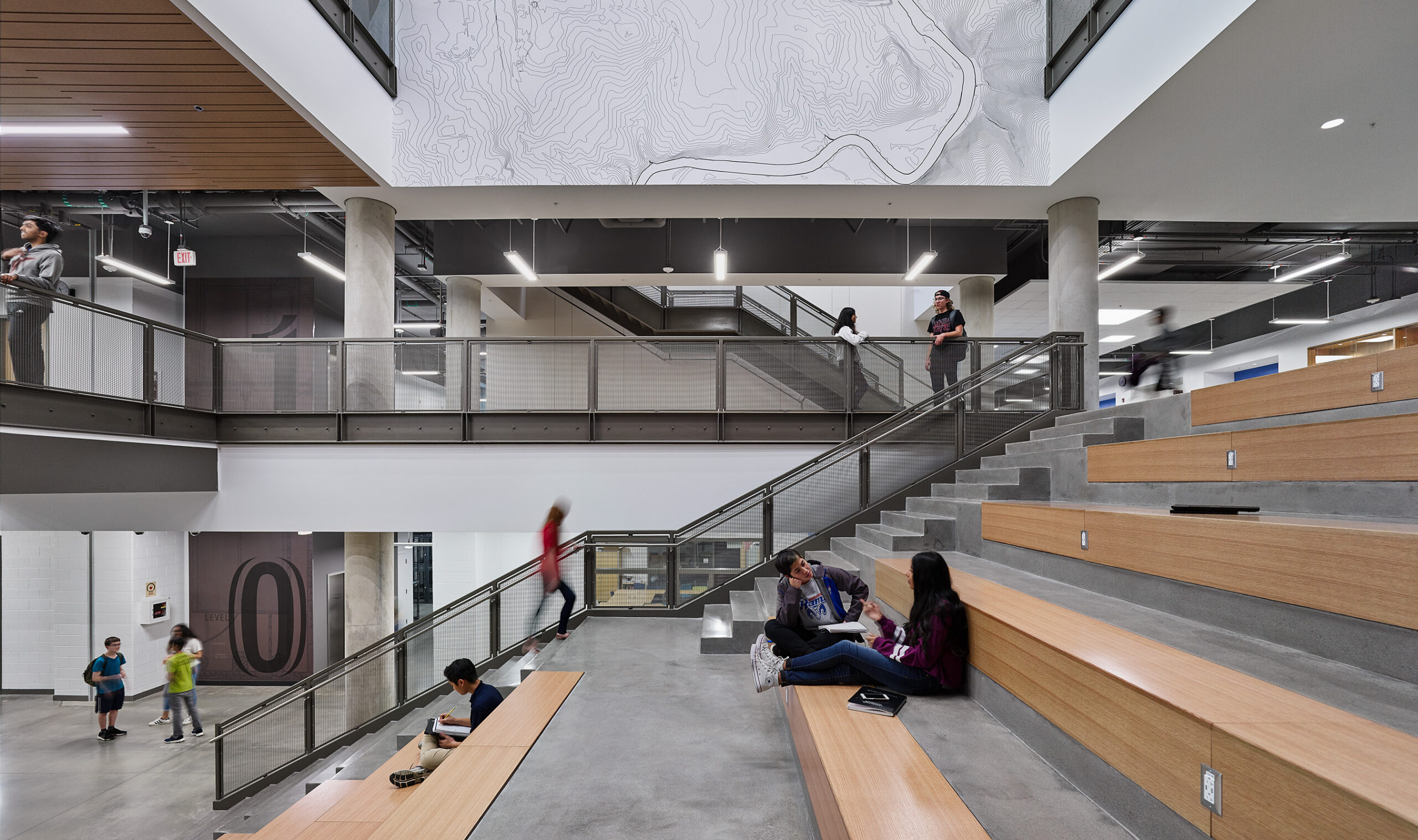
AOS and AET share a fall admissions process, but they do not offer the same high school experience. AOS is organized around advanced mathematics, science, research, and experimentation. AET is organized around engineering, information technology and computer science, entrepreneurship, research, and design.
The useful question is not which acronym sounds more impressive. It is which kind of difficult work a student wants to practice for four years.
The short answer
Choose AOS when sustained scientific inquiry and experimentation are the stronger fit. Choose AET when designing, building, coding, testing, or developing solutions is the stronger fit. If both descriptions are genuinely appealing, LCPS permits an eligible eighth grader to apply to both.
AOS and AET compared
| Question | AOS | AET |
|---|---|---|
| Official emphasis | Mathematics, science, research, experimentation, creativity, and collaboration | Engineering, information technology and computer science, entrepreneurship, research, and design |
| Questions students often enjoy | Why did this happen? What evidence would test the explanation? | How could this work better? What can we design, build, code, or improve? |
| Common work habits | Careful observation, reading, analysis, documentation, and staying with uncertainty | Iteration, debugging, collaboration, testing against constraints, and presenting a solution |
| Admissions path for eighth graders | Fall admissions | Fall admissions |
The first and fourth rows summarize current LCPS materials. The questions and work habits are AcademiesPrep guidance for comparing fit. They are not admissions criteria.
What AOS asks students to enjoy
The official AOS page emphasizes sophisticated scientific questions, research and experimentation, connections among science, mathematics, and the humanities, and university-level communication. A student does not need to arrive as a finished researcher. Curiosity, patience with evidence, and a willingness to revise an explanation matter more than having a polished career plan in eighth grade.
What AET asks students to enjoy
The official AET page and current LCPS curriculum materials describe advanced work in engineering, information technology and computer science, and entrepreneurship. The through-line is applied problem solving: students use research, design, technology, testing, and communication to develop something that must work under real constraints.
One shared admissions process does not make the programs interchangeable
For current eighth graders, LCPS publishes the same fall criteria for AOS and AET. Students applying to both submit a separate application for each program, then take the Writing Assessment and the Academies of Loudoun Admission Test once.
Families sometimes infer that they should choose whichever program seems easier to enter. That logic rests on numbers LCPS does not publish on its current central admissions page. A rumor about an acceptance rate cannot tell you whether a student will enjoy four years of the program's actual work.
Applying to both is a fit decision
Select both programs when the student can explain, in specific terms, why either experience would be a meaningful choice. Do not select both simply because two boxes feel safer than one.
The decision matters because LCPS describes AOS and AET as four-year commitments. Its FAQ does not offer an internal transfer after enrollment. A student seeking a different curricular program must withdraw and reapply during winter admissions. Our switching guide explains the distinction between pathway changes, waitlists, and switching after enrollment.
Three questions that reveal fit better than a prestige debate
- What kind of problem keeps the student curious? Ask for one scientific question they would investigate for a month and one product, system, or program they would improve for a month.
- What kind of frustration will they tolerate? Research can involve ambiguous results and slow progress. Engineering and technology can involve failed prototypes, bugs, constraints, and repeated iteration.
- What work do they describe afterward? Listen for whether they talk more vividly about evidence and explanations or about designs and solutions. Specific enthusiasm is more informative than “I like STEM.”
Preparation for the shared assessments can happen alongside this decision. Strong STEM reasoning and clear timed writing support both applications. The goal of preparation is not to imitate secure questions or reveal private methods. It is to help students reason carefully, communicate clearly, and recognize where they lose time.
AOS versus AET: FAQs
Can an eighth grader apply to both AOS and AET?
Yes. LCPS permits current eighth grade applicants to select AOS, AET, or both during fall admissions.
Do AOS and AET applicants take different assessments?
No. AOS and AET applicants take the same assessments once, but each program needs its own application.
Is AOS automatically more competitive than AET?
LCPS does not publish a current program-by-program acceptance rate on its central admissions page. Do not choose a program from an unsupported odds estimate.
Can a student switch from AOS to AET after enrolling?
Not through an internal transfer. LCPS says a student seeking another curricular program must withdraw and reapply during winter admissions.
Useful next guides
- Learn how applying to both programs works
- Understand the switching and reapplication rule
- Review the published fall admissions criteria
- Read the ACL Admissions Overview
Source note
Program descriptions and admissions statements in this guide come from current LCPS and Academies of Loudoun pages. The fit questions are AcademiesPrep guidance, not official admissions criteria. AcademiesPrep by EduAvenues is independent and is not endorsed or sponsored by the Academies of Loudoun or Loudoun County Public Schools.
Official sources reviewed:
- Academy of Science program page
- Academy of Engineering and Technology program page
- Academies of Loudoun admissions FAQ
- LCPS Academies of Loudoun Admissions and Outreach
- LCPS Career and Technical Education curriculum
Fact-checked September 26, 2026. LCPS can change program structures, criteria, and dates. Confirm current details on the official pages before applying.