
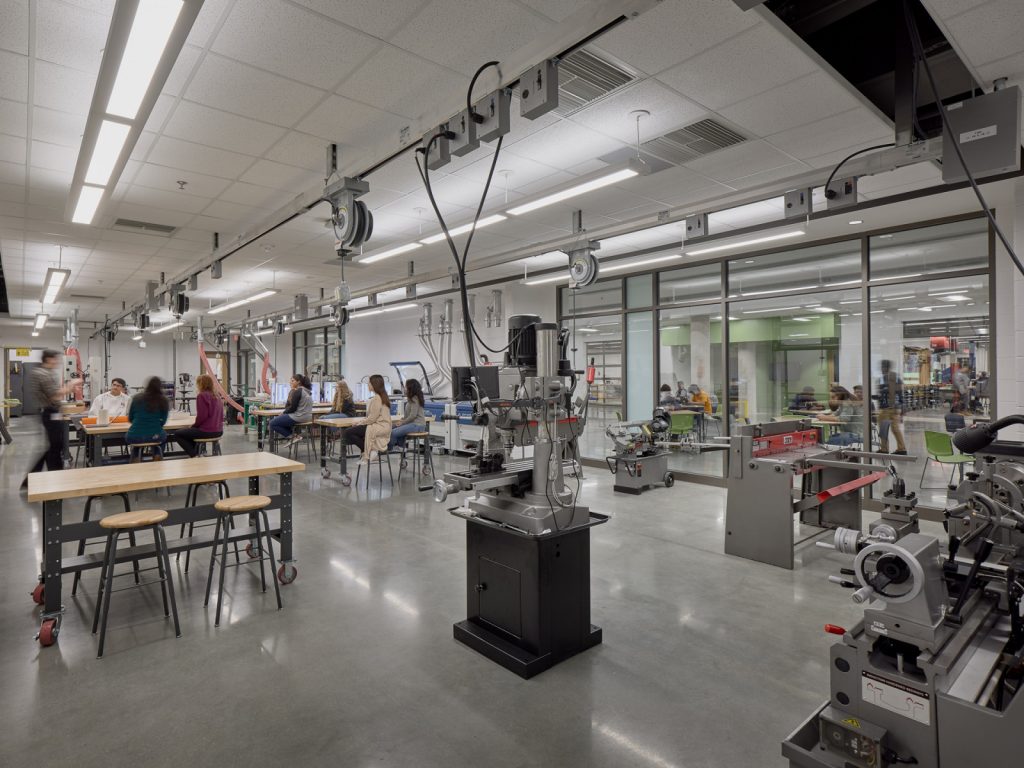
If your family is looking at the Academies of Loudoun, the hard part is rarely interest. Loudoun has many students who like science, math, engineering, technology, health, research, design, or hands-on problem solving. The hard part is knowing what matters now, what can wait, and how to prepare without turning the admissions season into noise.
Scientific thinking is not a memory test. It is the discipline of using observations and evidence to decide which explanation actually holds up.
What scientific thinking means
Scientific thinking involves framing a problem from observations, identifying likely relationships among facts, and deciding what evidence would support or weaken competing hypotheses.
Students should practice separating evidence from assumption, testing claims against the data provided, and recognizing when a conclusion reaches further than the evidence allows.
What this means for your family
This skill is central to the spirit of AOS, but it matters for all fall AOS/AET applicants. Students need to separate what the data shows from what they already believe. They also need to recognize whether a conclusion is too broad, too narrow, or unsupported.
For most families, this is where preparation becomes more personal. Two students can have the same grades and need completely different support. One may lose time because they overcalculate. Another may solve accurately but explain poorly. Another may have strong ideas but produce writing that is too general for a timed response. A good plan starts with the actual student in front of you.
How to prepare without overbuilding
Practice should include experimental design, variables, controls, graph interpretation, and claim-evidence-reasoning. The best students are not the ones who sound scientific. They are the ones who can say exactly what evidence supports the answer.
Keep prep connected to evidence. If the student misses a STEM problem, identify the reason. If a writing response feels weak, name the specific weakness. If timing falls apart, find the moment where time was lost. Families do not need a larger pile of work as much as they need a sharper feedback loop.
Common mistake to avoid
The mistake is overusing outside science knowledge. Background knowledge can help, but the assessment often asks students to reason from the information provided. Bringing in assumptions can lead to attractive wrong answers.
The better move is to simplify. Decide what the next two weeks should improve, then choose practice that fits that target. This keeps students from confusing busyness with readiness.
A simple next step
After each scientific reasoning problem, ask: what observation would change my mind? If the student can answer, they are thinking like an investigator.
If you want a clearer read before choosing a prep path, start with the free ACL Admissions Diagnostic. Your student completes a compact STEM reasoning sample and a writing response, then you receive parent-ready feedback in 3-7 business days.
Request the Free ACL Admissions Diagnostic
Source note
This article was prepared using the LCPS Academies of Loudoun Admissions and Outreach page, the official ACL school page, the LCPS Program of Studies, the Insight Assessment STEM Thinking Skills Test page, and AcademiesPrep program pages. AcademiesPrep by EduAvenues is independent and is not endorsed or sponsored by the Academies of Loudoun or Loudoun County Public Schools.